The Row’s Most Legendary Bag Shapes, Broken Down
In fashion, The Row occupies a peculiar yet desirable spot. The Olsen sisters established a house that steers clear of logos, steers clear of trend churn, and avoids almost everything the accessories industry is built around, but even so its bags have emerged as some of the most subtly desired objects in luxury. Talk to devotees of the row fashion and you’ll hear that novelty isn’t the point. It’s about balance, craftsmanship in the hides, and a quiet restraint. It’s this same restraint that accounts for both the strong resale performance of the row handbags and the months-long row bag waitlists at flagship stores.
Here, we go over the shapes that built the label’s standing, the details that separate one silhouette from the next, and the points at which misunderstanding usually crops up for new buyers. There’s also a comparison table further down for anyone trying to decide between the brand’s most requested styles before hunting for a row sale or checking resale platforms.
The Reason The Row’s Bags Work Differently From Other Luxury Houses
The majority of luxury handbag marketing relies on seasonal releases, partnerships, or conspicuous branding that broadcasts status at a glance. The brand upended that model from day one. Bags are manufactured in modest quantities, hardware is minimal or entirely absent, and build details like edge-painting and hand-stitched handles count for more than any exterior logo. It’s because of this that discussions around the row bags overview online gravitate to leather sourcing and silhouette over “It girl” campaigns.
Prices reflect that manufacturing approach. Many of the brand’s leather totes and top-handle bags fall within the four-figure range, with exotic-skin or oversized versions rising higher. Secondhand and resale marketplaces have turned indispensable for shoppers after the best row bags without full retail cost, owing to that pricing structure. When a row sale appears through select department stores, it tends to move fast because supply was always limited to begin with.
Also, the brand’s design philosophy accounts for why such a large share of its bags carry shared design cues. Because yves saint laurent soft-edged corners, gentle slouch, and minimal hardware recur throughout the lineup, it’s proportion and handle build — not dramatic silhouette shifts — that separate one style from another. This subtlety is part of why the brand rewards close study.
How The Margaux Built The Row’s Handbag Reputation
If there’s one style credited with turning The Row from a low-key ready-to-wear label into a bona fide handbag destination, it’s the Margaux. Taking its name from a Bordeaux wine region, the bag launched featuring an unstructured, slightly slouchy tote silhouette that felt like a pointed departure from the stiff, embellished-with-hardware totes dominating luxury shelves at the time. It comes in multiple sizes, commonly known as Margaux 12, 15, and 17, with the number loosely corresponding to width in inches.
The hide used is dense and substantial, the handles sit short enough that bigger sizes demand underarm carry, and the closure is typically a simple magnetic snap or open top depending on the version. The exterior carries no visible branding at all. That lack of identification was the whole idea: insiders spot it immediately, but it goes unnoticed by outsiders.
As demand rapidly exceeded supply almost as soon as it released, shoppers frequently search for where to buy the row margaux bag across the brand’s direct site as well as authorized luxury sellers that periodically offer limited stock. Availability fluctuates by season and leather colorway, and certain shades move off shelves faster than the rest. Shoppers exploring the row tote bag category overall typically begin with the Margaux because it remains the silhouette most cited across both resale platforms and styling content.
The Sofia, Ali, and Alexandra: Structured Options Worth Considering
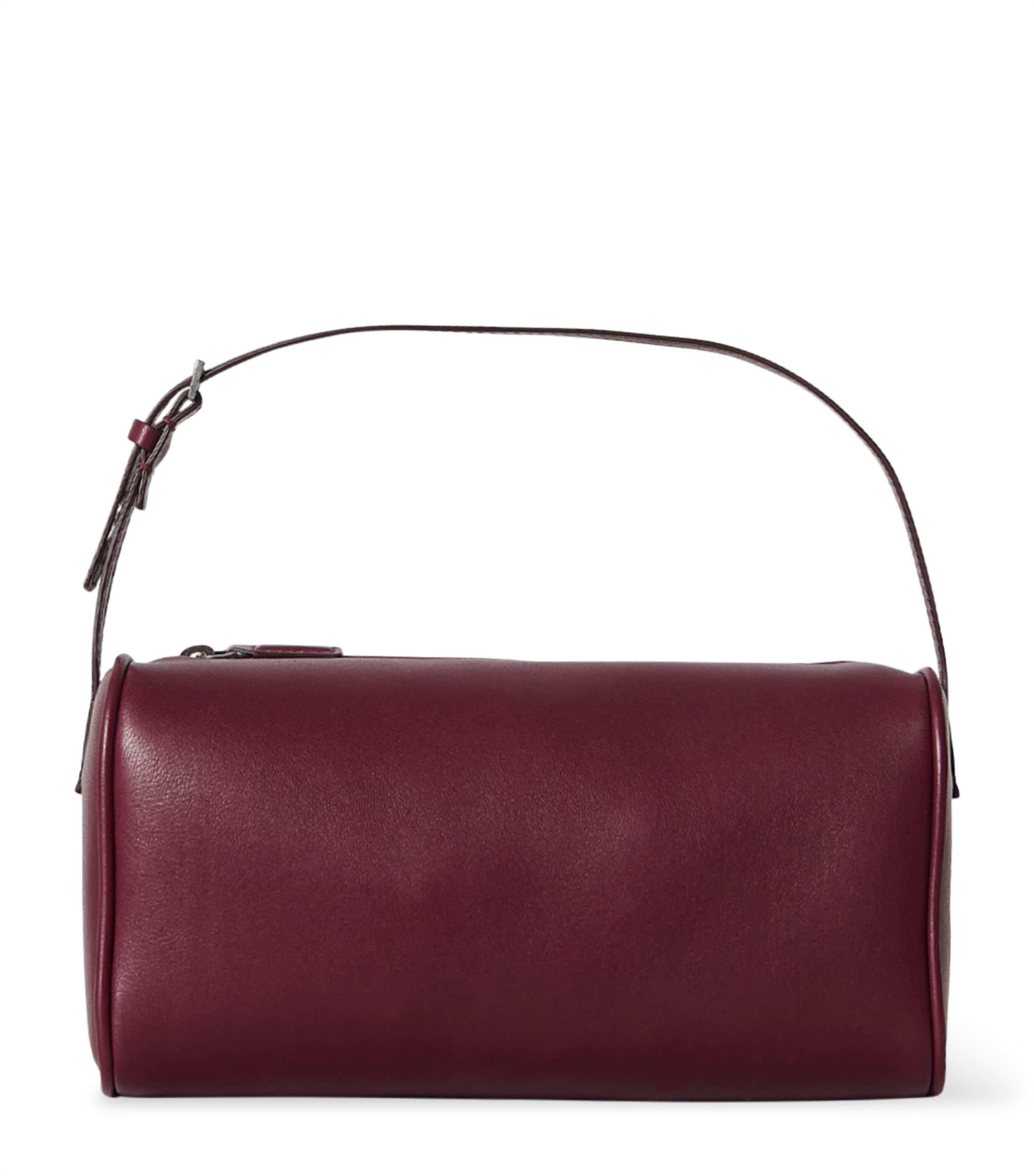
Past the Margaux itself, The Row’s structured top-handle bags fill in the rest of its most-sought catalog. The Sofia leans closer to a traditional handbag shape, with a more rigid frame and a top handle sized for hand-carry rather than shoulder or underarm wear. The Ali, meanwhile, sits somewhere between a clutch and a mini top-handle, appealing to buyers who want the brand’s material quality in a smaller daily footprint.
Of the group, the Alexandra is the most architectural, featuring a firmer base and a form that stays structured even when only half full. Shoppers arriving from more structured luxury houses, wanting presence without branding, tend to gravitate toward this one. Across all of them runs the same thread: quiet craftsmanship, sparse hardware, and leather left to do the talking.
When comparing top row bags among these three names, buyers frequently base their choice on handle drop and interior volume rather than color or seasonal stock, since shades don’t shift as dramatically here as they do at other luxury houses. The shopping experience is, by design, unhurried and considered.
The N/S Park Tote Along With Other Everyday Styles
Far from every emblematic shape from The Row comes as a structured handbag. Styles such as the N/S Park Tote and comparable large-scale carryall silhouettes speak to the brand’s more casual, editorial-favorite dimension. Rather than holding a rigid form, bags of this kind typically soften and drape, since they’re commonly left without lining or barely lined and made from a single standout leather panel. They’ve become a staple among stylists and editors who want a recognizable-without-logo daily bag.
These larger totes tend to be priced slightly below the brand’s structured top-handle bags, which makes them a common entry point for first-time buyers exploring the row bags line before committing to a smaller, pricier silhouette. They also hold up well as an everyday commuter bag, something the smaller Margaux sizes aren’t always practical for.
Because these tote styles share materials and construction techniques with the rest of the line, the quality gap between “entry” and “flagship” pieces at The Row is smaller than at most comparable luxury houses. That consistency is part of why loyal shoppers keep returning to the brand rather than shopping around each season.
Breaking Down The Differences Among The Row’s Signature Bag Shapes
| Bag Shape | Form Type | Usual Handle Type | Best For |
|---|---|---|---|
| Margaux | A carryall that’s loose and freeform | Short top handles | Everyday luxury, understated status |
| Sofia | Tailored top-handle bag | Solid, unbending top handle | Formal daytime looks, and office settings |
| Ali | Petite top-handle/clutch-style hybrid | Compact handle accompanied by a optional strap | Minimal daily use or nighttime occasions |
| Alexandra | A bag with an sculptural built-up form | Permanent top handle | Shoppers wanting a bag that holds its form |
| N/S Park Tote | A relaxed tote in a generously sized cut | Lengthy over-the-shoulder straps | Everyday errands, travel, and commuting |
A Guide to How and Where to Buy The Row’s Handbags in 2026
To shop this brand successfully, patience is essential. Fresh drops rarely arrive with fanfare, and its own store footprint continues to be deliberately small, with signature boutiques in leading urban centers and a small yet expanding digital storefront. Select luxury department stores carry rotating inventory, and that’s generally where a discounted row piece is likeliest to appear, typically during end-of-season sale periods rather than quick flash sales.
For those specifically hunting where to purchase the row margaux bag, keeping an eye on the brand’s own website as well as its authorized retailers routinely is the most reliable approach, given that restocks aren’t announced in advance and in-demand leather shades sell out fast. Reselling marketplaces that verify the authenticity of premium pieces have as well become a trustworthy secondary option for shoppers priced out of retail or hunting for discontinued colorways.
Regardless of the starting point, the silhouettes covered here form the backbone of the row handbags catalog as it is positioned heading into 2026. Culturally, the Margaux stays the centerpiece of the lineup, buyers after structure and formality gravitate toward the top-handles, and for daily, no-fuss use, the oversized totes fill that space. Once these distinctions are clear, shopping the brand becomes much less overwhelming and much more purposeful, which, as it happens, is precisely the way The Row approaches the design of everything it produces.
No responses yet